How to Sell a Luxury Home in Plymouth MN
July 2, 2026
July 2, 2026
Wondering what it really takes to market a higher-end home in Plymouth? In a city where buyers can compare lake settings, trail access, district boundaries, commute routes, and finish quality all at once, selling well takes more than putting a sign in the yard. If you want a stronger launch, better buyer interest, and a strategy built around how people actually shop for homes today, this guide will walk you through the approach. Let’s dive in.
Higher-end homes in Plymouth do not compete on price alone. Buyers often look closely at micro-location details like proximity to lakes, access to trails and parks, commute convenience, lot privacy, and the specific features and updates inside the home. That means the marketing plan has to tell a clear story about why your property stands out in this exact part of Plymouth.
Plymouth gives that story real substance. The city sits about 12 miles northwest of Minneapolis and offers convenient access to I-494, Highway 55, Highway 169, and I-394. It also has nearly 2,000 acres across 68 developed parks, 186 miles of trails, 8 lakes, and more than 1,000 wetlands, which makes lifestyle a real part of a home’s value, not just a nice extra.
For some sellers, that story may center on outdoor living and access to Medicine Lake or nearby regional parks. For others, it may be about a quiet lot, polished updates, flexible living space, or easy access across the West Metro. The key is to position the home around the features buyers in Plymouth already care about.
One of the biggest mistakes in higher-end marketing is using broad citywide averages to price a unique home. Plymouth market snapshots show an active market, but reported figures vary by source because median sale price, listing price, and home value are not the same thing. That is why pricing should begin with recent comparable sales that match your home as closely as possible.
For a higher-end listing, Andy narrows the comp set by factors that can materially change buyer demand. That can include school district boundaries, lot type, water adjacency, privacy, condition, and the quality of recent upgrades. In a market like Plymouth, those details can have a meaningful effect on how buyers value the home.
This pricing process is about more than finding a number. It is about creating a launch price that feels credible to serious buyers while protecting your upside. When pricing is paired with strong presentation and exposure, it gives your home the best chance to attract attention early, which is often when the market responds most strongly.
Even beautiful homes benefit from thoughtful preparation. Staging helps buyers visualize themselves in the space, and research cited by the National Association of Realtors shows that 82% of buyers’ agents said staging helped clients visualize a property as their future home. It also supports better listing photos, which can influence whether buyers choose to tour the property.
For higher-end Plymouth homes, staging is not about making the home look artificial. It is about making the best features easier to see. Clean sightlines, balanced furniture placement, fresh light, and intentional styling help buyers focus on the home itself instead of distractions.
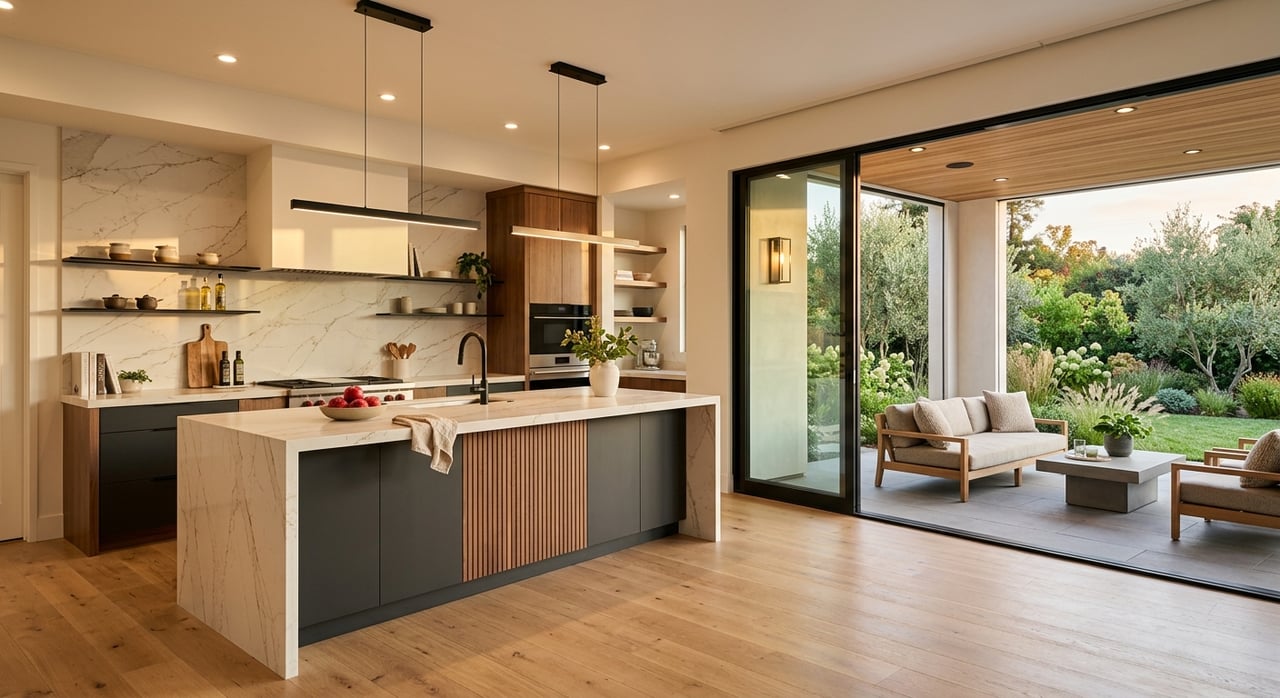
Andy’s approach emphasizes practical presentation choices that fit how Plymouth buyers shop. That often means highlighting open living areas, kitchen function, lower-level flex space, storage, outdoor entertaining zones, and any view, trail, or lake-related advantage the property offers. The goal is simple: make the home feel polished, spacious, and memorable both online and in person.
In higher-end homes, not every feature carries the same weight. Plymouth trend data suggests buyers respond especially well to homes with useful bonus space and thoughtful outdoor upgrades. Features tied to strong sale-to-list performance included workshop space, paver patios, French doors, finished basements, new roofs, and large center islands.
That matters because strong marketing is not just a list of amenities. It is a curated message about how the home lives. A finished lower level may be framed as flexible space for work, hobbies, entertaining, or guests, while a paver patio may support a stronger outdoor living story.
In other words, Andy markets features in a way that connects them to buyer priorities. Utility, flexibility, finish quality, and well-executed updates often matter as much as square footage. When the right features are emphasized in the right way, buyers are more likely to see the full value of the property.
Today’s buyers usually meet your home online first. According to the National Association of Realtors, 43% of buyers started their search online and 51% found the home they purchased through an online search. Zillow research also found that 67% of prospective buyers had already viewed homes for sale on a real estate website.
That is why premium visuals are not optional for a higher-end listing. Research shows buyers find high-resolution photos, detailed property information, and floor plans especially useful. In fact, Zillow’s 2025 consumer report found floor plans ranked first for 33% of prospective buyers, ahead of photos at 26%.
Andy treats professional imagery and clear floor plans as core parts of the launch, not afterthoughts. The photography should showcase natural light, room flow, materials, and standout design details. A strong floor plan helps buyers understand scale and layout quickly, which can increase interest before they ever book a showing.
Video can still play a supporting role, especially for a visually compelling property. But for most buyers, photos and floor plans do more of the heavy lifting. That is where the marketing has to be exceptionally strong from the beginning.
A polished listing matters, but early engagement matters even more. Zillow research shows the median listing on its platform went pending after 15 days and sold at 98% of its initial list price. The same research found that stronger daily views, saves, and shares often point to better outcomes.
That is why Andy focuses on launch strategy, not just launch day. The goal is to create a listing that earns clicks, keeps buyers engaged, and gives them enough information to save and revisit the property. Since many buyers compare homes over multiple weeks, your listing needs to hold attention after that first impression.
This is especially important in Plymouth, where buyers may be comparing several attractive options at once. Realtor.com reported more homes for sale year over year, even in a fast-moving market. That means your home still needs to compete on pricing, presentation, and online performance from the moment it goes live.
Higher-end buyers do not always come from just one neighborhood or even one metro area. Some are moving across the West Metro, some are relocating for work, and some are widening their search based on lifestyle priorities like lake access, outdoor amenities, or a specific home style. That makes broad digital exposure a major part of the strategy.
Andy combines a boutique, hands-on approach with the distribution power of eXp Realty. eXp reports a network of more than 87,000 agents across 24-plus countries, along with specialized divisions that include Luxury. For Plymouth sellers, that supports a local-plus-national reach story that can help expose the listing to both in-market and out-of-area buyers.
Just as important, Andy pairs that reach with local context. A broad audience may discover the home online, but strong local positioning is what helps them understand why this property in Plymouth deserves a closer look. That combination of neighborhood knowledge and wide distribution is where the marketing becomes especially effective.
For many higher-end homes, the property itself is only part of the buying decision. Plymouth offers real lifestyle advantages that can strengthen how a home is positioned. The city notes strong transportation access, major park and trail infrastructure, multiple lakes, and a large employment base with about 54,000 jobs.
That means your marketing should reflect the property’s real-world setting. If the home is near trails, parks, or water, that can shape the buyer story. If it offers a convenient commute or sits within an area that buyers often seek for its location or setting, that should also be presented clearly and factually.
District boundaries can also matter to buyers evaluating options in Plymouth, since the city is served by four public school districts, with Wayzata Public Schools covering the largest share of the city. The right marketing approach does not make broad claims. It simply presents accurate location context that helps buyers understand the home in a practical way.
When you are selling a higher-end home, details matter. You need more than generic advice or an automated listing process. You need a plan that covers pricing, presentation, launch timing, digital marketing, buyer response, and transaction management with steady communication from start to finish.
That is where Andy’s boutique model stands out. You get hyper-local West Metro knowledge, consultative pricing, staging guidance, premium visual marketing, relocation support when needed, and hands-on service throughout the process. It is a personal approach backed by the broader systems and exposure of eXp Realty.
For many Plymouth sellers, that balance is exactly what they want. You get thoughtful strategy and personal attention, without giving up the reach needed to compete at a higher price point.
If you are thinking about selling a higher-end home in Plymouth, the smartest first step is a pricing and marketing conversation built around your property’s specific strengths. To talk through your home’s value, positioning, and launch plan, connect with Andy Peterson.
Stay up to date on the latest real estate trends.
Whether you’re searching for a lakeside retreat or a family home near great schools, Andy Peterson is here to guide you every step of the way. Contact him today to start your journey toward homeownership with confidence.